
Imagine waking up one morning to find your home unexpectedly flooded or filled with dangerous carbon monoxide. Water heater safety inspections might seem like just another chore, but they play a pivotal role in preventing such scenarios. By keeping tabs on your water heater, you’re ensuring its efficiency and safeguarding your home and loved ones from potential hazards. How do these inspections contribute to your safety, and what issues can they help you avoid? The answers might surprise you.
Preventing Carbon Monoxide Poisoning
Ensure your water heater is properly vented to prevent the dangerous buildup of carbon monoxide in your home. Begin by inspecting the venting system for any obstructions or disconnections. Check the flue pipe, verifying that it is securely connected and free of rust or corrosion. The pipe should slope upward from the water heater to the chimney or vent outlet to facilitate proper exhaust flow.
Next, verify that the vent cap is in place and intact. This prevents debris from entering and blocking the vent. If your water heater is located in a confined space, verifying adequate ventilation is crucial. This circulates fresh air, supporting efficient combustion and reducing carbon monoxide risks.
Regularly inspect the draft hood to confirm it’s aligned correctly. An off-center draft hood can impede airflow, leading to incomplete combustion and carbon monoxide production. For added safety, use a carbon monoxide detector in areas close to the water heater. It is a critical early-warning system that alerts you to potential leaks.
Avoiding Water Damage
To prevent costly water damage, inspect the water heater’s tank and connections regularly for signs of leaks or corrosion. Start by examining the tank’s exterior for rust or dampness. If you notice moisture, it might indicate a leak that could lead to significant property damage if not addressed promptly. Pay close attention to the connections and valves, as these are common points of failure. Tighten any loose fittings, but don’t over-tighten, as this can cause stress on the pipes.
Check the pressure relief valve, ensuring it’s functioning correctly. Lift the valve’s lever to let some water out, then release it. If water continues to flow, the valve may need replacing. Additionally, inspect the drain valve at the bottom of the tank for any seepage. Draining the tank periodically helps remove sediment that can cause internal corrosion, extending the heater’s lifespan.
Install a drip pan under the water heater, especially if it’s located where leaks could cause damage. A pan can prevent small leaks from spreading while alerting you to potential issues. Taking these proactive steps helps protect your home and serves those who rely on you for a safe living environment.
Ensuring Energy Efficiency
To enhance energy efficiency, regularly adjust the thermostat to the ideal temperature setting and insulate the water heater and its pipes to reduce heat loss. Setting the thermostat to around 120°F (49°C) not only conserves energy but also prevents the risk of scalding, offering a safer environment for everyone in your household. Insulation is essential as it helps maintain the water temperature, ensuring the heater doesn’t work harder than necessary. Use pipe insulation sleeves and a water heater blanket to achieve the best results.
Conduct routine inspections to identify and rectify any sediment buildup that impedes energy efficiency. Drain a few gallons of water from the tank every few months to minimize sediment accumulation. This not only improves efficiency but also guarantees the unit’s smooth operation.
As part of your inspections, verify the efficiency of your water heater’s heating elements or burner assembly. Confirm they are functioning correctly, as inefficient components can greatly increase energy consumption. By maintaining these elements, you’re not just saving energy but also directly contributing to a more sustainable environment. Prioritizing energy efficiency reflects your commitment to serving others by reducing unnecessary energy use and promoting environmental responsibility.
Extending Appliance Lifespan
Regular maintenance is vital for considerably extending the lifespan of your water heater. When you conduct routine inspections, you guarantee that key components like the anode rod, temperature-pressure relief valve, and tank lining remain in ideal condition. Anode rods are sacrificial elements that prevent corrosion; replacing them every 3-5 years can drastically improve your water heater’s longevity. Keeping the temperature-pressure relief valve functional mitigates the risk of excessive pressure buildup, thereby avoiding potential damage.
Flushing the tank annually is another important step. Sediment build-up at the bottom of the tank can reduce efficiency, causing the system to work harder and wear out faster. By flushing, you remove these deposits, preserving the tank’s material integrity and extending its service life.
Additionally, ensuring your water heater’s temperature remains within the manufacturer’s recommended range prevents overheating and unnecessary stress on the heating elements. This prolongs the appliance’s life and guarantees safe operation for those you serve.
Identifying Potential Leaks
While maintaining your water heater, it’s important to identify potential leaks early to prevent costly damage and guarantee maximum efficiency. Begin by inspecting the area around the heater’s base. Look for any signs of moisture, such as puddles or dampness, which could indicate a leak in the tank or connections. Pay close attention to the temperature and pressure relief (TPR) valve, which can sometimes release water if the pressure is too high. Confirm the valve is tightly sealed and not corroded.
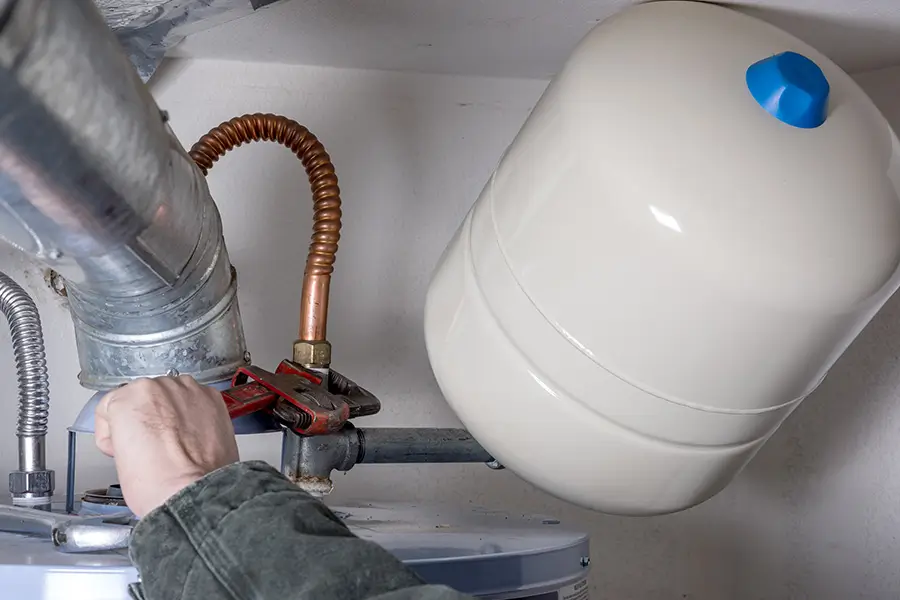
Next, examine all visible pipes and fittings for signs of rust or corrosion, common indicators of leaks. Check the inlet and outlet connections where water enters and exits the heater. Tighten any loose connections with a wrench, but be careful not to overtighten, as this can cause damage. Listen for unusual sounds, such as hissing or dripping, which might suggest a hidden leak.
Monitor your water heater’s pressure gauge regularly. If the pressure consistently reads higher than recommended levels, it could lead to leaks. By staying vigilant and inspecting your water heater regularly, you ensure it serves others efficiently and safely.
Maintaining Optimal Performance
Ensuring your water heater functions at peak efficiency involves regularly flushing the tank to remove sediment buildup, which can impair performance and reduce lifespan. Over time, minerals and debris accumulate at the bottom of the tank, affecting heat transfer and increasing energy consumption. By flushing the tank every six months, you maintain ideal heating efficiency and extend the life of your water heater. Start by turning off the power supply and cold water intake. Attach a hose to the drain valve and direct the water into a safe drainage area. Open the valve to let the water flow out until clear. This process cleans the tank and checks for any unusual debris that might indicate issues.
Regularly inspect the anode rod, a vital component that prevents tank corrosion. Unscrew and remove it every two to three years to check its condition. If it’s greatly corroded, replace it to protect your tank. Test the temperature and pressure relief valve by lifting the lever, ensuring water flows out, and then resealing properly. These actions are essential for maintaining your water heater’s ideal performance, ensuring it serves you and others effectively with minimal disruption.
Detecting Corrosion Early
Identifying early signs of corrosion in your water heater is essential for preventing leaks and ensuring long-term efficiency. Corrosion typically occurs due to chemical reactions between metal components and water, often exacerbated by minerals or impurities. You should regularly inspect the tank’s exterior for rust or discoloration, which indicates potential internal problems. Pay close attention to the anode rod, a sacrificial part that attracts corrosive elements. If depleted, replace it promptly to protect your tank.
Check the water heater’s base for signs of moisture or pooling water. These could signal corrosion that has already led to leaks. Listen for unusual sounds like popping or hissing, which might suggest sediment buildup, causing uneven heating and accelerating corrosion.
Inspect plumbing connections and valves for signs of rust or mineral buildup. These can restrict water flow and contribute to the system’s overall deterioration. Conduct a periodic flush to remove sediment from the tank, helping maintain its integrity.
Preventing Scalding Accidents
After confirming that your water heater’s components are corrosion-free, focus on adjusting the thermostat to a safe temperature setting to prevent scalding accidents. The recommended setting is 120°F (49°C). This temperature minimizes the risk of burns while providing sufficient hot water for household needs—a thermometer to check the water temperature at the tap after adjustments, confirming accuracy.
Verify the thermostat’s accuracy regularly, as fluctuations can happen over time. If the water feels excessively hot, it may signal a malfunctioning thermostat. In such cases, immediate professional inspection is necessary to prevent potential injuries.
Encourage everyone in your household to monitor water temperature, especially when bathing children or assisting the elderly. Their skin is more sensitive to high temperatures, increasing the risk of burns. Educate them about the importance of testing the water with a hand or elbow before full immersion.
As an additional measure, install anti-scald devices on faucets and showerheads. These devices automatically adjust water flow when temperatures exceed safe levels. By taking these steps, you’ll confirm a safer environment, demonstrating your commitment to the well-being of those you serve.
Ensuring Proper Ventilation
To maintain safe operation, confirm your water heater’s unobstructed ventilation system and efficient combustion gas expels. Begin by inspecting the vent pipes for any blockages or damage, which can lead to dangerous gas buildup. Check for rust, corrosion, or any loose connections that compromise ventilation efficiency. A securely fastened vent pipe confirms that harmful gases like carbon monoxide are safely directed outside, protecting those in your care.
Verify the vent system has adequate clearance from combustible materials. This prevents fire hazards and maintains the ideal temperature and flow rate of the exhaust gases. Regular inspection and maintenance can avert potential dangers, allowing you to focus on serving others with peace of mind.
Additionally, consider the location of the water heater. It should be in a well-ventilated area to prevent the accumulation of gases. If your water heater is confined, install a mechanical ventilation system to promote air exchange. Taking these precautions will safeguard your environment and those who rely on you. Proper ventilation enhances safety and promotes the longevity and efficiency of your water heater system.
Reducing Repair Costs
Regular maintenance checks can significantly reduce water heater repair costs by catching minor issues before they escalate. When you inspect your water heater regularly, you can identify problems such as sediment buildup, faulty pressure relief valves, or minor leaks. Addressing these early can save you from more costly repairs or even full replacement. By investing time in routine checks, you guarantee the longevity and efficiency of your water heater, ultimately minimizing the need for expensive emergency repairs.
Utilizing a systematic approach during inspections is key. Check the anode rod, as it prevents tank corrosion. If it’s worn out, replace it before it causes significant damage. Examine the thermostat settings to ensure they’re optimized for energy efficiency, reducing strain on the heater. Don’t forget to inspect the tank for any signs of rust or corrosion, which can indicate a looming problem. Additionally, draining the tank periodically to remove sediment can enhance performance and reduce energy costs.
Incorporating these practices into your maintenance routine not only lowers repair costs but also extends the service life of your water heater, guaranteeing it serves others efficiently and reliably.
 412-2456.webp)
Conclusion
You’ve taken a significant step toward maintaining your home’s well-being by scheduling regular water heater inspections. These evaluations help you avoid surprises like silent gas intrusions or unexpected waterworks. By keeping an eye on critical components, you’re extending your heater’s golden years and ensuring it’s running smoothly and efficiently. Embrace these checks as part of your home’s health regimen, safeguarding your sanctuary and promoting responsible energy stewardship.